The Unexpected Departure: Inside oBo's Exit from Complexity Gaming
Complexity Gaming's strategic roster management was tested by oBo's shocking departure, forcing the organization to navigate difficult negotiations and temporary solutions.
I still remember the shock that rippled through our community when Jason Lake announced Owen "oBo" Schlatter's departure from Complexity Gaming. It's been almost a year now, but the impact of that decision still resonates in our organization. As someone who witnessed the events unfold, I can tell you it wasn't an easy transition for anyone involved.
oBo, who had been with our CS:GO team since June 2019, made the difficult decision to return to the United States rather than continue competing in Europe. The young talent, only 17 at the time, had expressed reservations about remaining overseas during the player break, and ultimately informed the team of his departure just 24 hours before it happened. Talk about dropping a bombshell!
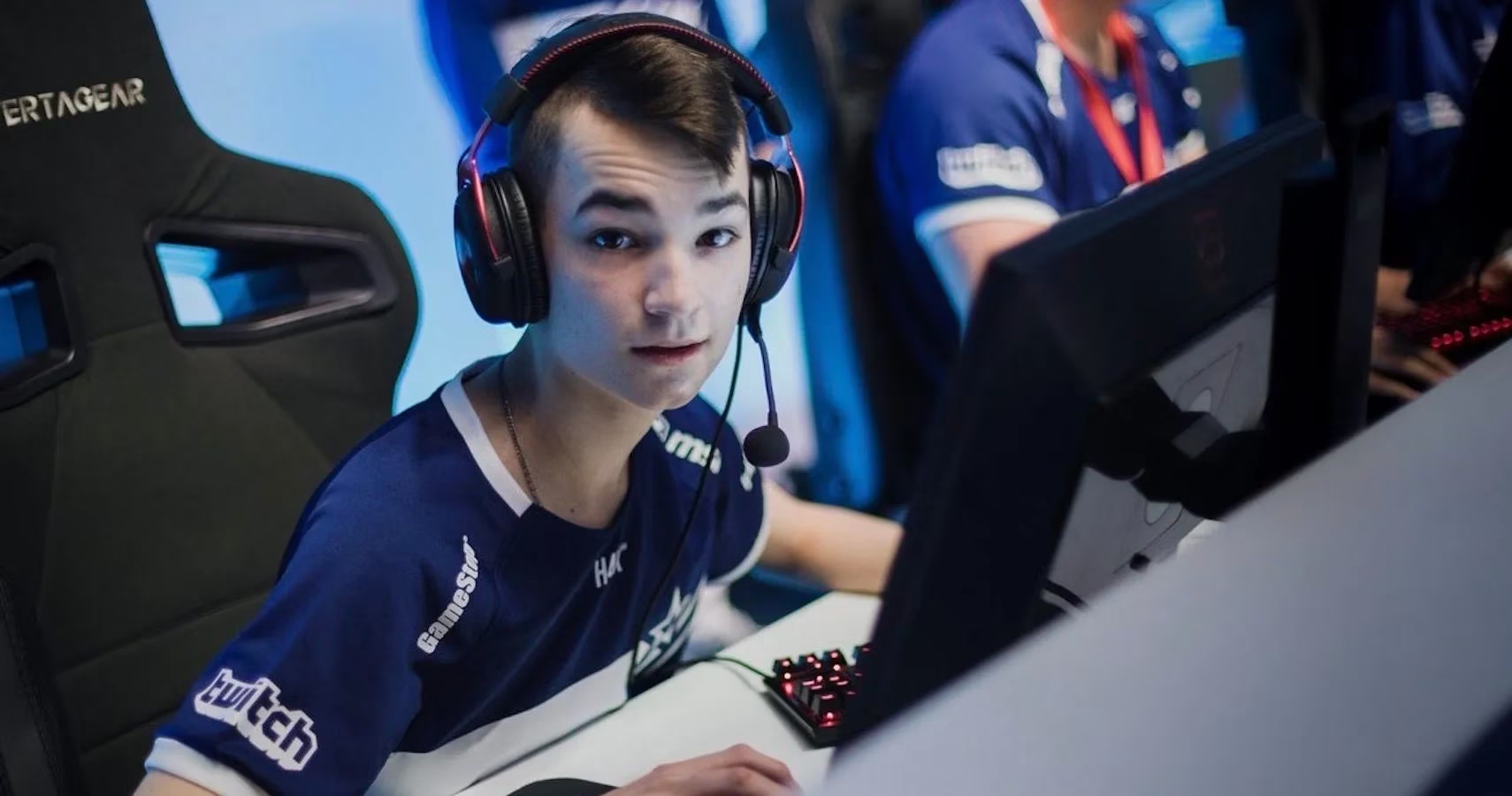
The Ripple Effect
The timing couldn't have been more challenging. We were preparing for the ESL Pro League playoffs, and suddenly we found ourselves a player short. Our CEO wasn't mincing words when he addressed the situation in a press conference on his stream:
"Over the player break, oBo expressed reservations about returning to Europe," Lake explained. "He ultimately decided to return [to the United States] approximately 24 hours ago, and he informed the team he'd be returning to the US at the conclusion of the EPL playoffs."
What made this particularly tough was oBo's standing in the community. Having competed since 2016, he had established himself as a formidable rifler with estimated winnings exceeding $131,000. Not exactly small potatoes in the competitive scene!
Finding a Path Forward
In true Complexity fashion, we tried to make the best of a difficult situation. The organization, based in our hometown of Frisco, Texas, committed to helping oBo find a new team in North America. Meanwhile, we began the search for his replacement, with Lake emphasizing our commitment to finding "the absolute best player available."
But let me tell you, the market wasn't making things easy for us. Lake noted that buyouts were "a bit ridiculous" and made it clear that Complexity would "not be extorted by teams trying to capitalize on this situation." You've gotta respect that kind of backbone in negotiations!
Temporary Solutions
While the search continued, we had to find immediate solutions. Our team's coach, Jamie "keita" Hall, stepped in as a substitute for the DreamHack Open Fall closed qualifier. The results were... well, let's just say there's a reason coaches aren't typically active players! We lost our first match in the double-elimination bracket to Portuguese side sAw and faced SJ in the lower bracket.
The big question hanging over our heads was whether we could secure a permanent replacement before the ESL Pro League Season 12 playoffs. Lake was transparent about the possibility that we might need to use an emergency substitute if no suitable replacement could be found in time.
The Complexity Legacy
Despite these challenges, it's worth remembering what Complexity represents in the esports world. We're one of the oldest organizations still active in the CS:GO scene, having first fielded a team way back in 2004. That's practically ancient history in esports terms!
Our roster at the time of oBo's departure included:
-
Benjamin "blameF" Bremer (Denmark)
-
William "RUSH" Wierzba (United States)
-
Kristian "k0nfig" Wienecke (Denmark)
-
Valentin "poizon" Vasilev (Bulgaria)
-
Coach Jamie "keita" Hall (United Kingdom)
Beyond CS:GO, Complexity has maintained a diverse presence across the esports landscape, competing in:
-
Call of Duty
-
Dota 2
-
Hearthstone
-
Gwent: The Witcher Card Game
-
Rocket League
-
Clash Royale
-
Fortnite
-
Madden
Looking Back from 2026
Now, as we approach the six-year anniversary of oBo's departure, it's fascinating to reflect on how that moment represented a crossroads for both the player and the organization.
The esports landscape has evolved dramatically since then. Prize pools have grown, new games have emerged as competitive staples, and the infrastructure supporting players has become more robust.
Yet some things remain constant: the pressure on young players to perform at the highest level, the challenges of maintaining team cohesion across international borders, and the difficult personal choices that sometimes override professional considerations.
In our industry, we sometimes forget that behind every gamer tag is a real person with real feelings and needs. oBo's decision, while disruptive to our competitive plans, was ultimately a young person making a choice about what was best for his wellbeing.
And isn't that what matters most in the end?
As we continue to build and rebuild rosters, chase championships, and navigate the ever-changing esports ecosystem, perhaps the most important lesson from the oBo situation is the reminder that we're all human first, competitors second.
And sometimes, home is simply where you need to be.