The Shadow Game: CS:GO's Hidden Dangers and Community Resilience in 2026
The persistent Steam invite exploit continues to threaten Counter-Strike players with cybersecurity vulnerabilities, highlighting Valve's corporate negligence. Despite this, the resilient community fights back with ingenious vigilante tactics and artistic resistance.
In the digital battlegrounds of Counter-Strike, danger lurks not only in virtual alleyways but in the very code that brings the game to life. Five years since its discovery, the infamous Steam invite exploit continues to haunt the shadows of Valve's ecosystem, a digital specter that refuses to be exorcised despite community outcry. The vulnerability, allowing malicious actors to steal personal information through seemingly innocent game invitations, stands as a testament to corporate negligence in an era of increasing cybersecurity threats.
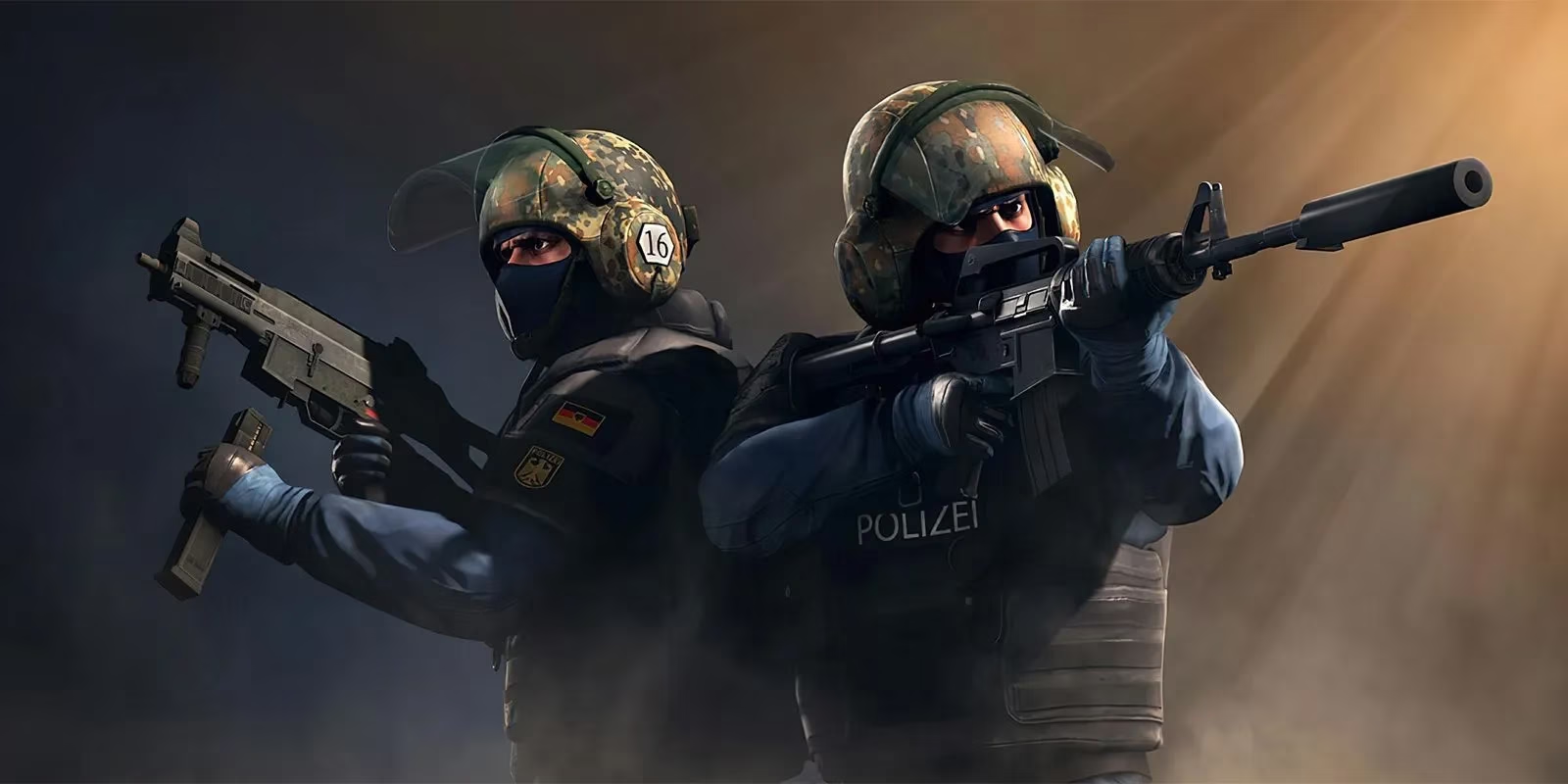
The Persistent Threat
The exploit, first uncovered by The Secret Club in 2021, remains a thorn in the side of the Counter-Strike community. These non-profit engineers, dedicated to the art of reverse-engineering, demonstrated how any invitation to a CS:GO match could be weaponized. Their findings revealed a frightening truth: malicious code could execute upon game launch, compromising user data without a trace. Most disturbing was Valve's response—silence followed by alleged attempts to suppress the information rather than address the fundamental flaw.
Five years later, in the spring of 2026, this vulnerability persists across the Source engine ecosystem. Players must still exercise extreme caution. They navigate digital waters where every unknown invitation potentially harbors a predator. The community's frustration has crystallized into resignation; veterans warn newcomers with the solemn mantra: "Never accept invites from strangers."
Community Vigilantes
Yet in this digital dystopia, heroes emerge from unexpected places. The tale of ScriptKid, a vigilante YouTuber, continues to inspire resistance against the cheating plague. His ingenious counter-offensive—distributing trojan horse cheating software—has evolved into a sophisticated ecosystem of anti-cheat vigilantism.
The fake cheating programs, advertised to entice the morally compromised, deliver poetic justice instead of unfair advantages. Cheaters find their characters betraying them at crucial moments:
-
Weapons mysteriously dropping during firefights
-
Characters leaping from heights without command
-
Aim assistance that deliberately misses targets
-
Grenades that return to sender with deadly precision
ScriptKid's approach represents the community's resilience. Where official protection fails, grassroots innovation flourishes. His methods, controversial yet effective, have spawned a new generation of digital vigilantes who fight fire with cleverly disguised fire.
Artistic Resistance
The Counter-Strike community's creativity extends beyond security measures. Artistic expression flourishes as a form of resistance against stagnation. Dedicated mapmakers continue to reimagine familiar battlegrounds, breathing new life into well-worn spaces.
One particularly mesmerizing project saw the distinctive visual style of Nuke transplanted onto other popular maps. Cache, Office, and Mirage—transformed yet familiar, disorienting yet beautiful. These artistic endeavors represent more than aesthetic experiments; they symbolize the community's determination to evolve despite corporate neglect.
The Corporate Silence
Valve's continued silence regarding the exploit raises troubling questions about corporate responsibility in 2026. As digital threats grow more sophisticated, the company's apparent indifference stands in stark contrast to the community's vigilance.
The vulnerability's persistence across the Source engine ecosystem creates a troubling reality:
-
Players must self-police their online interactions
-
Community developers must create unofficial patches and workarounds
-
Security researchers face potential silencing when exposing critical flaws
-
Trust in the platform erodes with each passing year of inaction
This dynamic has fostered a paradoxical relationship between the player base and the game's creators—a community that simultaneously loves the game while growing increasingly wary of its caretakers.
The Digital Battlefield in 2026
As Counter-Strike continues its evolution in 2026, the game itself mirrors the complex relationship between its players and developers. The virtual terrorists and counter-terrorists locked in eternal combat serve as metaphors for the larger struggle between security threats and community defense.
The digital battlefield extends beyond the game's maps to encompass:
-
Discord servers where players share security tips
-
GitHub repositories housing unofficial patches
-
YouTube channels documenting exploit avoidance techniques
-
Underground networks tracking known malicious actors
In this expanded conflict, every player becomes both potential victim and sentinel. They share information, develop countermeasures, and create systems of trust in the absence of corporate protection.
Looking Forward
The Counter-Strike community stands at a crossroads in 2026. Their beloved game, still vibrant despite its age, remains vulnerable to exploits first discovered half a decade earlier. Yet their resilience shines through the digital fog of war—a testament to human creativity and determination.
Security researchers continue their vigilance, documenting vulnerabilities and sharing protective measures. Artists reshape familiar environments, keeping the visual experience fresh despite technical stagnation. And vigilantes like ScriptKid evolve their methods, turning the tables on those who would undermine fair play.
This is the paradox of Counter-Strike in 2026: a game simultaneously threatened and protected by its own community, vulnerable yet resilient, aging yet eternally renewed through the passion of those who refuse to abandon their digital home despite the dangers that lurk within its code.
The battle continues, not just within the game, but for the game itself. And in this meta-conflict, the community fights with creativity, vigilance, and an unwavering commitment to the digital spaces they've claimed as their own.