The Evolution of Steel: From CS:GO Ban to VALORANT Rebirth
Joshua "steel" Nissan's strategic transition from CS:GO to VALORANT marks a dramatic career renaissance, allowing the veteran in-game leader to rebuild his legacy after a match-fixing ban.
In a significant career pivot that reflects the shifting landscape of competitive FPS gaming, Joshua "steel" Nissan has transitioned away from professional Counter-Strike: Global Offensive to pursue opportunities in Riot Games' VALORANT. This strategic career move, which began in 2020, has allowed the veteran in-game leader to rebuild his competitive legacy following the controversial iBUYPOWER match-fixing ban that dramatically altered his CS:GO trajectory.
The Rise and Fall in Counter-Strike
Steel established himself as one of North America's premier tactical minds during the early Global Offensive era. His exceptional leadership qualities and strategic approach to the game earned him recognition across the competitive scene. After representing various organizations, steel found his competitive home with iBUYPOWER in 2014, helping transform the roster into a regional powerhouse.
Under steel's tactical guidance, iBUYPOWER achieved impressive results, including championships at CEVO Season 4 and ESEA Global Invite Division Season 16. The team successfully qualified for ESL One Cologne 2014 Major, though they couldn't advance beyond the group stage. This period represented the pinnacle of steel's CS:GO career before controversy struck.
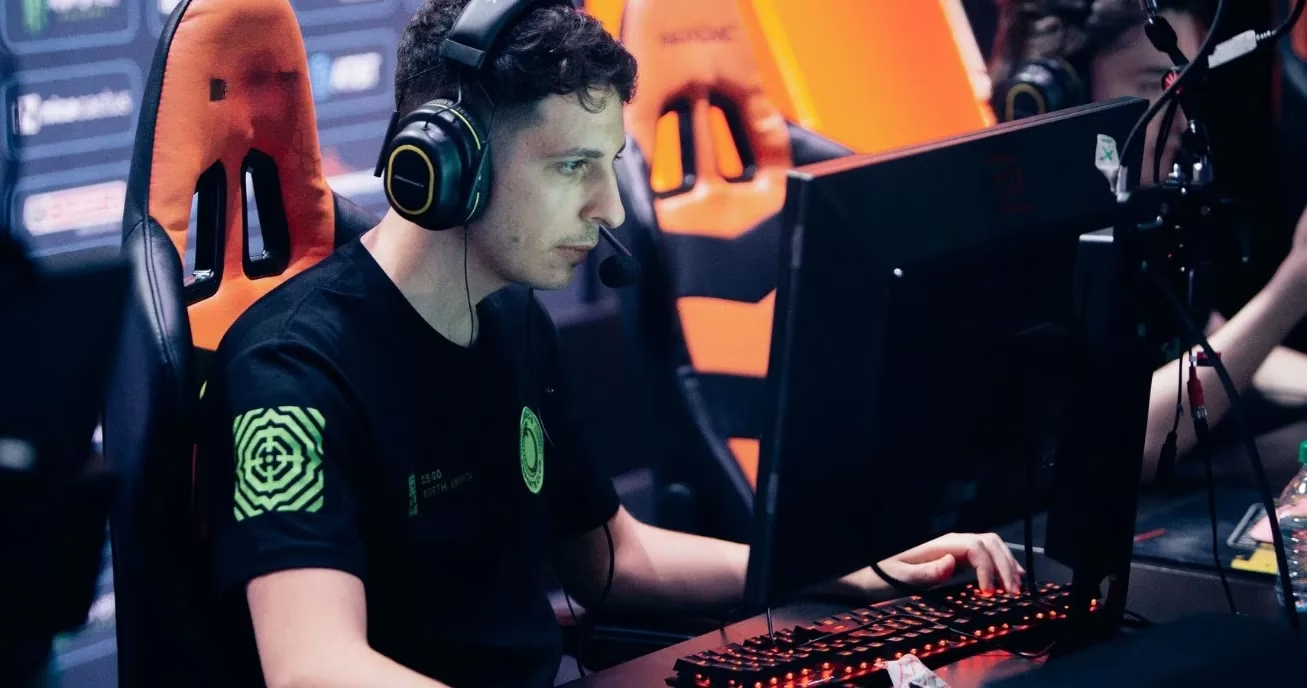
In January 2015, Valve permanently banned steel and three of his iBUYPOWER teammates from all Valve-sponsored tournaments following a match-fixing scandal. Despite ESL and DreamHack eventually lifting their bans in 2017 and numerous community appeals for clemency, Valve maintained its original verdict. This decision effectively barred steel from competing in CS:GO Majors, the most prestigious tournaments in the Counter-Strike ecosystem.
The Chaos Era and Transition Decision
Following the partial lifting of competitive restrictions, steel joined Chaos Esports Club in November 2019. His leadership proved valuable as he guided the team to qualify for Flashpoint Season 1 and reach the semi-finals of ESL One Cologne North America. Despite these accomplishments, the lingering effects of the Valve ban continued to limit his competitive ceiling in CS:GO.

Joining the VALORANT Movement
Steel's decision to transition to VALORANT followed a pattern established by several former CS:GO professionals, including his ex-iBUYPOWER teammates:
-
Braxton "Brax" Pierce
-
Tyler "Skadoodle" Latham
-
Keven "AZK" Larivière
The migration also included other high-profile players like longtime Team Liquid member Nick "Nitr0" Cannella, signaling a significant talent shift between the two competitive FPS titles.
The VALORANT Renaissance
Since making the switch, steel has experienced a career renaissance in VALORANT. Free from the restrictions of his CS:GO ban, he has been able to compete at the highest levels of Riot's tactical shooter. His extensive experience as an in-game leader has translated exceptionally well to VALORANT's strategic landscape.
The transition has offered steel and other banned ex-iBUYPOWER players something Valve never provided: a second chance. In VALORANT, these players have found an opportunity to rebuild their competitive legacies without the shadow of past mistakes hanging over them.
The Impact on Competitive FPS
Steel's journey represents more than just an individual career decision—it exemplifies broader trends in the competitive FPS ecosystem:
-
Developer Approach to Competitive Integrity: Riot's willingness to provide fresh starts contrasts with Valve's strict permanent punishment philosophy.
-
Talent Migration: The flow of established CS:GO talent to VALORANT has accelerated the new game's competitive development.
-
Career Rehabilitation: VALORANT has become a platform for talented players to resurrect careers impacted by bans or other setbacks.
-
Tactical Evolution: Former CS:GO leaders like steel have helped shape VALORANT's competitive meta by applying their strategic knowledge.
Legacy Considerations
As we look back from 2026, steel's decision to switch games appears prescient. VALORANT's competitive scene has flourished, offering substantial tournament circuits, organizational support, and viewer engagement. For players like steel, the game provided not just competitive opportunities but also a chance to redefine their esports legacy.
The story of Joshua "steel" Nissan serves as a compelling case study in competitive resilience and adaptation. Despite facing a career-altering setback with the Valve ban, steel's tactical brilliance and leadership qualities found new expression in VALORANT, demonstrating that esports careers can transcend individual game titles.
While Chaos Esports Club continued in CS:GO with Edgar "MarKE" Maldonado replacing steel, the organization's trajectory diverged from steel's renewed success in VALORANT. His departure marked not an end but a transformation—from CS:GO tactician to VALORANT strategist, writing a new chapter in one of esports' most interesting career narratives.
For fans who followed steel's journey from the beginning, his VALORANT career has provided a satisfying continuation of a competitive story that once appeared prematurely concluded by Valve's ban hammer. In the rapidly evolving world of competitive gaming, steel's adaptability stands as a testament to the resilience required for long-term esports success.