The Dark Side of Gaming: How Griefers Continue to Plague Online Communities in 2026
Online gaming in 2026 faces relentless griefing, as griefers disrupt virtual worlds and developers deploy advanced countermeasures to protect players.
The online gaming landscape in 2026 remains haunted by a persistent problem that has plagued virtual worlds for decades: griefing. These digital saboteurs derive pleasure not from winning or fair competition, but from systematically ruining the gaming experience for others. Unlike typical trolls who might engage in trash talk, griefers take disruption to another level by actively sabotaging gameplay and team objectives.
The Anatomy of a Griefer
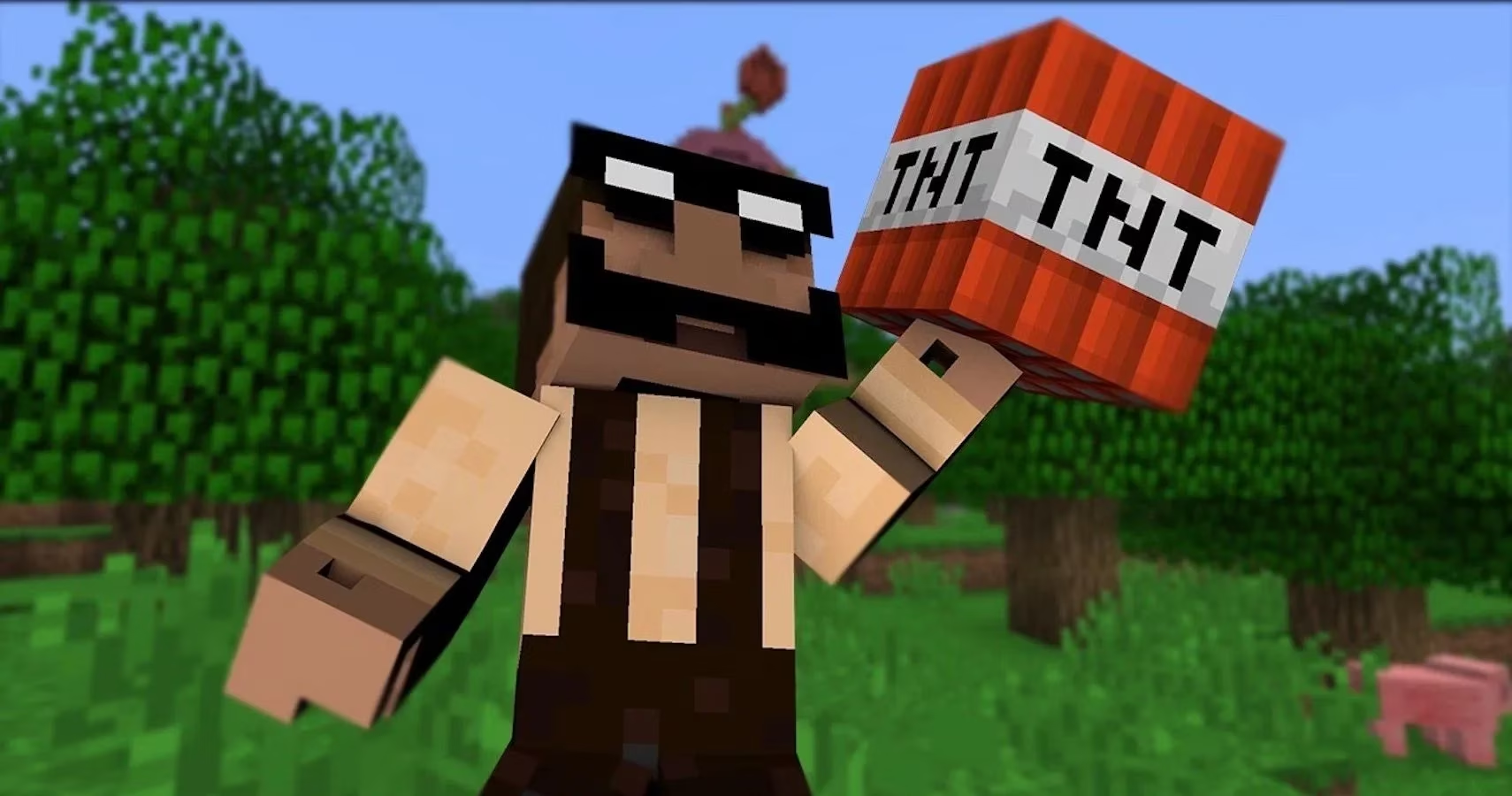
Griefers are essentially digital anarchists. They infiltrate team-based games with the sole purpose of creating chaos. In Counter-Strike, they blind teammates with flashbangs. Fortnite griefers build walls to obstruct their own team's progress. Minecraft communities continue to suffer from individuals who destroy meticulously crafted virtual cities, obliterating countless hours of creative work in minutes.
The psychology behind griefing is particularly troubling. These players often employ sophisticated strategies to maximize frustration. Many will deliberately throw competitive matches to lower their ranking, allowing them to re-enter easier tiers where they can continue their disruptive behavior against less experienced players. This calculated approach shows that griefing isn't merely random acts of digital vandalism—it's often a systematic form of harassment.
A Historical Perspective
The term 'grief' has become so embedded in gaming culture that it's now recognized as a verb in online dictionaries! 🤯 But this phenomenon isn't new to the 2020s. The behavior traces back to the early 1990s when an NYU student known as "Mr. Bungle" created duplicates of other players in a virtual role-playing game and attributed acts of sexual violence to them.
Over the decades, griefers have evolved their tactics to target different game genres:
-
FPS Games: Team Fortress Classic and Counter-Strike became early hotbeds for griefing due to their team-based nature
-
Battle Royales: Fortnite and similar games saw griefing evolve to include sabotaging building efforts
-
Sandbox Games: Minecraft communities continue to battle with destruction of creative works
-
Competitive Ladders: Overwatch and other ranked games face players who deliberately lose to manipulate matchmaking
Developer Responses in 2026
Game developers have implemented increasingly sophisticated anti-griefing measures as we've moved through the mid-2020s. Counter-Strike's approach of 30-day bans for confirmed griefers has been adopted by many competitive games. However, the cat-and-mouse game continues as griefers simply create alternate accounts to bypass these restrictions.
Riot Games' enhanced automated detection system, first announced years ago, has evolved into one of the industry's most effective tools by 2026. Their AI-powered behavior analysis can now identify patterns of griefing with remarkable accuracy, allowing for swift intervention without penalizing innocent players caught in the crossfire.
Some innovative solutions implemented in recent years include:
| Game | Anti-Griefing Measure | Effectiveness |
|---|---|---|
| Fortnite | Early match forfeit options | Moderate |
| Minecraft | Protected build zones | High for specific areas |
| Counter-Strike | Reputation scoring system | Variable |
| Overwatch 3 | Behavioral matchmaking | High |
The Community Response
Gaming communities have taken matters into their own hands. Public shaming of griefers by popular streamers has become a common deterrent. In a notable example from years back, professional Fortnite player Kyle "Bugha" Giersdorf called out a supposed friend for griefing, writing: "So boring. I had good rotate, I wanted to see how I can use a pad and peppers endgame, and then I am just getting griefed. Because you think it is funny to troll me."
This trend of community self-policing has expanded in 2026, with many gaming groups creating their own verification systems and trusted player networks. 🛡️
The Technological Arms Race
As we move through 2026, the technological battle between griefers and developers intensifies. New machine learning algorithms can now identify behavioral patterns that indicate griefing before major damage occurs. Some games have implemented reputation systems that follow players across multiple titles, creating consequences that span beyond a single game.
The most promising development has been the rise of community-governed spaces where players collectively establish and enforce norms. These digital democracies have proven remarkably effective at minimizing griefing while fostering positive interaction.
Looking Forward
The persistence of griefing despite decades of efforts to combat it suggests that this problem may be inherent to online interaction rather than specific to gaming. As virtual spaces become increasingly central to our social lives in 2026, the lessons learned from combating griefers may prove valuable beyond gaming communities.
For players experiencing griefing, the gaming community offers this advice:
-
Report disruptive behavior through official channels ✅
-
Document incidents when possible 📝
-
Avoid engaging with griefers directly ❌
-
Seek out communities with strong anti-griefing policies 🤝
-
Remember that the griefer's goal is to upset you—don't give them that satisfaction 😌
While perfect solutions remain elusive, the combined efforts of developers, communities, and individual players continue to make online gaming spaces more resilient against those who seek only to disrupt. The battle against griefing represents one of gaming's longest-running challenges—but also showcases the community's determination to preserve what makes online gaming special: the shared joy of play.