Pro Player's 35-Day Ban Sparks Debate Over CS:GO Justice System
CS:GO ban controversy erupts as pro player Pimp faces a harsh 35-day suspension, raising questions about Valve's Overwatch system fairness.
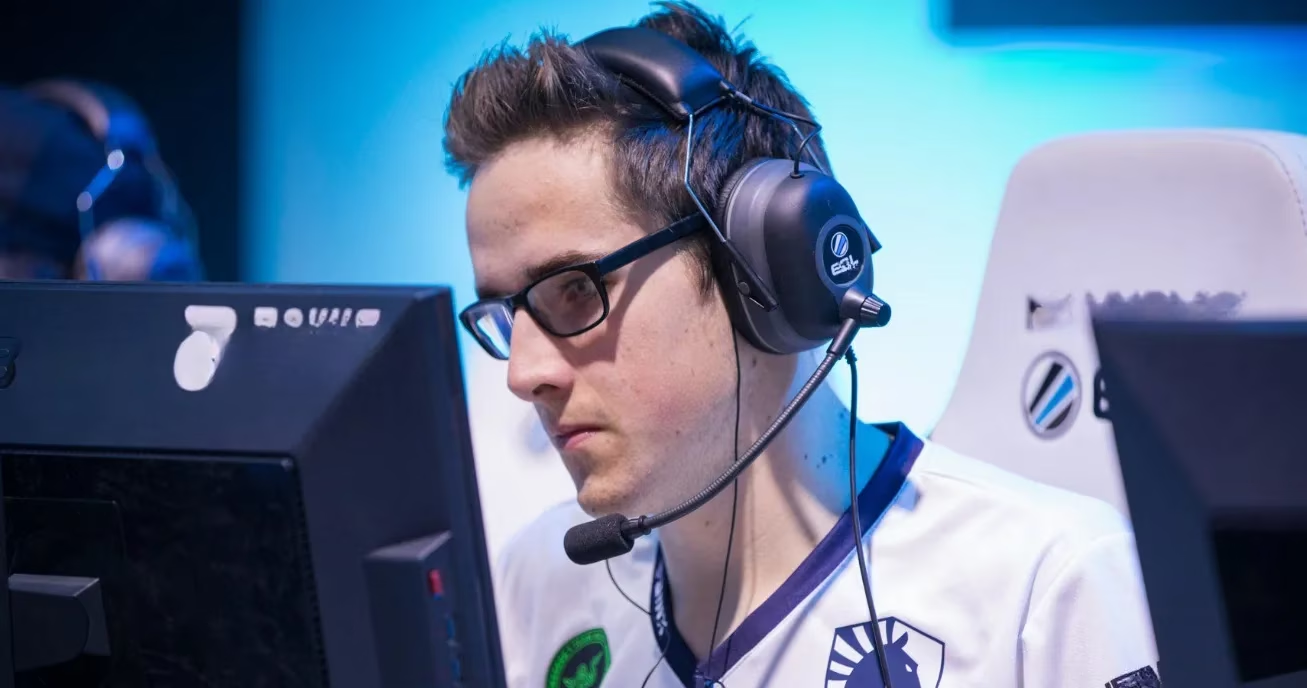
The competitive gaming world was rocked when Jacob "Pimp" Winneche, a seasoned veteran with six years of professional Counter-Strike: Global Offensive experience, found himself on the wrong side of Valve's enforcement system. What should have been just another day of competitive play turned into a month-long exile that has raised serious questions about the fairness and effectiveness of the game's automated justice mechanisms.
The Incident That Changed Everything
Pimp's ordeal began during what seemed like an ordinary competitive match. However, the situation quickly deteriorated when he realized he was facing an entire team of five cheaters. The frustration of competing against players who were clearly violating the game's integrity pushed him to a breaking point. Rather than endure what he perceived as a pointless exercise, Pimp advocated for surrendering the match early.
But not everyone on his team shared his perspective. One teammate insisted on continuing the game despite the obvious disadvantage. In a moment of heated frustration, Pimp made a decision that would cost him dearly – he eliminated his own teammate. This single action, born from exasperation with an impossible situation, triggered a chain of events that would see him banned from the game for 35 days.
Understanding the Overwatch System
To comprehend how this situation escalated so dramatically, one must understand the mechanics of CS:GO's Overwatch system. This community-driven review process was designed to help Valve manage the enormous task of policing millions of players worldwide. Here's how it typically works:
-
Report Submission: Players flag suspicious behavior during matches
-
Case Review: Selected community members watch recorded rounds
-
Verdict Decision: Reviewers determine if violations occurred
-
Punishment Assignment: Appropriate disciplinary actions are implemented
The system relies heavily on context and human judgment. Reviewers watch only a few rounds of gameplay, making their decisions based on limited information. In Pimp's case, this limitation may have been the critical flaw. A reviewer likely observed him killing his teammate – a clear violation of the rules – but may have completely missed the context: an opposing team full of cheaters making the match unplayable.
The Question of Proportionality
What makes this case particularly controversial is the severity of the punishment. A 35-day ban for griefing seems extraordinarily harsh, especially for a professional player whose livelihood depends on maintaining their skills and presence in the competitive scene. Typically, griefing violations result in much shorter suspensions, often ranging from a few days to a week at most.
Could the system have malfunctioned? Did the reviewer misinterpret the severity of the offense? Or was there something else at play that warranted such an extended ban? These questions have sparked intense debate within the CS:GO community, with many players sharing their own stories of seemingly unjust punishments.
The Broader Implications
Pimp's situation highlights a fundamental tension in competitive gaming: how do we balance automated enforcement systems with the need for human judgment and context? While the Overwatch system has successfully caught countless cheaters and griefers over the years, cases like this expose its limitations.
Consider the irony of the situation: Pimp was essentially punished for reacting to cheaters, while the five players who were actually ruining the game's integrity may have continued playing without consequence. This raises uncomfortable questions about the system's priorities and effectiveness.
The Professional Player's Dilemma
For someone like Pimp, who has dedicated years to mastering CS:GO and building a career around it, a 35-day ban represents more than just lost playing time. It means:
-
📉 Deteriorating mechanical skills from lack of practice
-
💼 Potential loss of sponsorship opportunities
-
🎮 Missing crucial competitive events and tournaments
-
👥 Disconnection from the professional community
-
💰 Direct financial impact on streaming and content creation
Community Response and Support
The CS:GO community's reaction to Pimp's ban has been mixed but largely sympathetic. Many players have expressed frustration with similar experiences, sharing stories of being punished for minor infractions while encountering blatant cheaters who seem to operate with impunity. Social media platforms erupted with discussions about the need for reform in how Valve handles these situations.
Some community members have organized campaigns calling for Valve to review the case more thoroughly. Others have used the incident as a catalyst to discuss broader issues with the Overwatch system, suggesting improvements such as:
-
Providing reviewers with more context about matches
-
Implementing appeals processes for professional players
-
Creating different punishment tiers based on player history
-
Offering more transparency in ban decisions
The Waiting Game
As of now, Pimp finds himself in a frustrating limbo. His only options are to appeal to Valve for a review of his case or simply wait out the 35-day suspension. The former option offers hope but no guarantees – Valve's review process can be slow and opaque, with little communication about the status of appeals.
The latter option, while certain, comes with its own costs. Every day away from competitive play is a day of skill degradation, a day of lost opportunities, and a day of mounting frustration. For a professional player, this isn't just an inconvenience; it's a career setback that could have lasting implications.
Lessons for the Gaming Industry
This incident serves as a cautionary tale for game developers and publishers everywhere. As competitive gaming continues to grow and professionalize, the systems we use to maintain fair play must evolve accordingly. Automated systems and community-driven enforcement mechanisms have their place, but they cannot be the only solution.
What happens when the system designed to protect players ends up punishing them unfairly? How do we ensure that context matters in disciplinary decisions? These are questions that extend far beyond CS:GO and touch on fundamental issues of justice and fairness in digital spaces.
Looking Forward
The gaming community now watches and waits to see how Valve will respond to this controversy. Will they acknowledge the potential flaw in their system? Will they reduce or overturn Pimp's ban? Or will they stand by their original decision, sending a message that rules are rules, regardless of context?
Whatever the outcome, this case has already served an important purpose: it has sparked a necessary conversation about how we enforce rules in competitive gaming. As esports continues to mature and attract more professional players, sponsors, and viewers, these systems must become more sophisticated and nuanced.
The story of Pimp's ban is more than just one player's unfortunate experience – it's a reflection of the growing pains of an industry still learning how to balance automation with human judgment, rules with context, and punishment with fairness. As we move forward, the hope is that cases like this will lead to meaningful improvements that benefit all players, from casual enthusiasts to professional competitors.
For now, Pimp must wait, the community must watch, and Valve must decide. The outcome of this case may well set precedents that shape how competitive gaming handles similar situations for years to come. One thing is certain: the conversation about fairness, context, and justice in gaming is far from over.