My Journey Through Gen.G's CS:GO Roster Transition: A Player's Perspective
Gen.G CS:GO roster changes and the rise of VALORANT in 2020 reshaped North American esports, sparking pivotal shifts and fierce debates.
As I sit here in early 2026, looking back at the evolution of competitive Counter-Strike, it's almost surreal to think about the seismic shifts that began reshaping the landscape half a decade ago. The memories of Gen.G's decision to place their entire CS:GO roster on the transfer list back in late 2020 still feel fresh in my mind. It was a pivotal moment that sent ripples throughout the North American scene.
The Rise and Fall of a Promising Squad
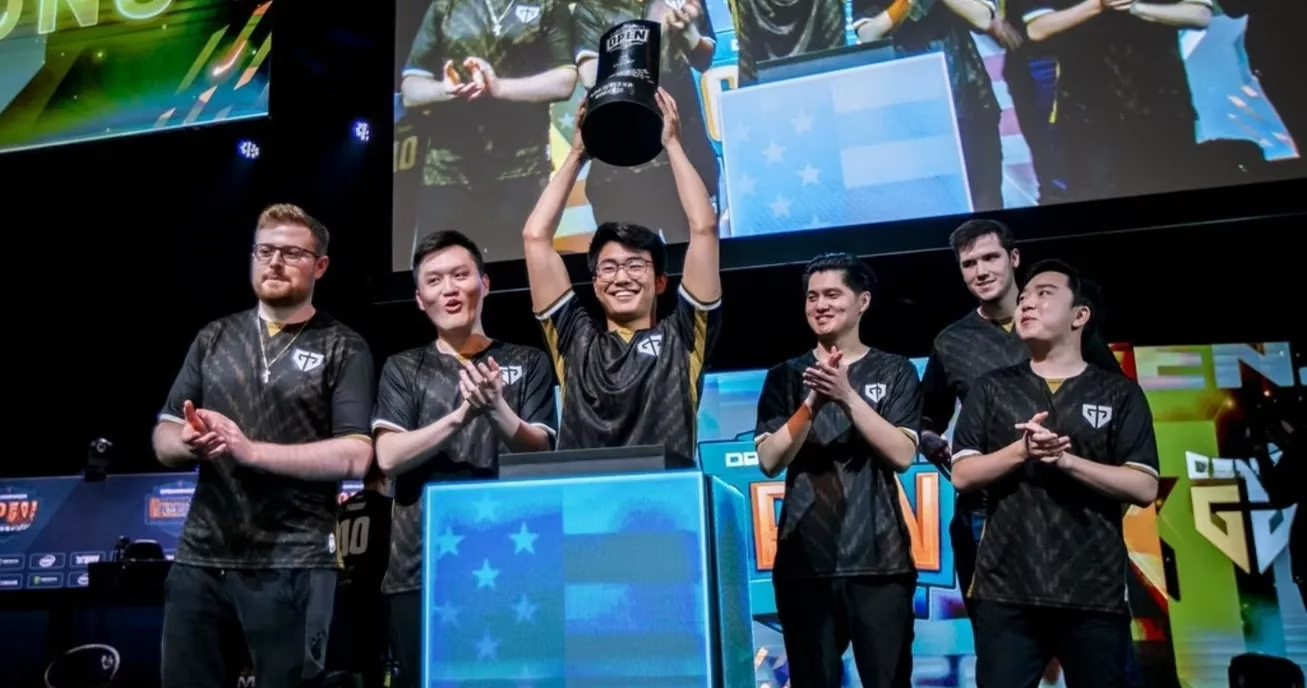
Gen.G burst onto the Counter-Strike scene in 2019, scooping up Cloud9's former core and assembling what many considered a dream team in North American CS. The roster was stacked with talent: Damien "daps" Steele calling the shots, Timothy "Autimatic" Ta bringing firepower, Kenneth "Koosta" Suen with his consistent performances, TyLoo's star Hansel "BnTeT" Ferdinand adding international flair, and young gun Sam "s0m" Oh rounding out the lineup.
Man, those guys were absolutely cracked! The chemistry they developed was something special to witness. Their gameplay wasn't just about individual skill—though they had plenty of that—it was how they moved together, like they could read each other's minds.
The squad quickly established themselves as North American contenders, claiming victories at DreamHack Open Anaheim and ESL One: Road to Rio North America in early 2020. Those tournaments showcased what made this roster special – a perfect blend of tactical discipline and raw mechanical skill that few teams could match.
The Beginning of the End
Things started to unravel when daps stepped down from the active lineup in September 2020, eventually retiring from professional Counter-Strike altogether. S0m followed shortly after, making the jump to VALORANT that many players were considering at the time.
I remember watching their streams during that transition period. The uncertainty in their voices, the mixture of excitement and apprehension about what came next...
The team tried to adapt, bringing in Swedish veterans Richard "Xizt" Landström and Rasmus "kreaz" Johansson as stand-ins, but the magic of the original roster seemed to have dissipated. By the end of 2020, the remaining members—Autimatic, BnTeT, and coach Chris "Elmapuddy" Tebbit—were all placed on the transfer list and allowed to explore options for the 2021 season.
The VALORANT Question
The timing of these roster changes coincided with VALORANT's meteoric rise in the competitive FPS scene. It left many wondering if this was yet another organization pivoting away from CS:GO.
Autimatic's tweet about trying VALORANT before making his decision perfectly captured the crossroads many CS pros found themselves at. It wasn't just about switching games—it was about weighing career longevity, financial opportunities, and competitive passion.
Gen.G representatives were quick to clarify that this move wasn't simply "VALORANT over CS" but rather giving players freedom to explore their options heading into 2021. Sometimes you've just gotta let people find their own path, you know?
The Aftermath and Legacy
Looking back from 2026, we can now fully appreciate how significant this period was for competitive Counter-Strike. The North American exodus to VALORANT that began around this time fundamentally altered the competitive landscape of both games.
Some players found renewed success in VALORANT, while others remained loyal to Counter-Strike through its evolution into Counter-Strike 2. The Gen.G roster dispersal represents a fascinating case study in how organizations and players navigate game transitions and competitive uncertainty.
Reflections on Team Chemistry
What made that Gen.G lineup special wasn't just their tournament results, but the visible synergy they displayed. Having watched countless hours of their matches and practice sessions, I could see how they functioned as a cohesive unit rather than five individual stars.
Their communication during clutch moments, the trust they placed in each other's abilities, and their willingness to adapt strategies mid-match set them apart from many contemporaries. This wasn't just mechanical skill—it was emotional intelligence and team chemistry at work.
The Business of Esports
From an organizational perspective, Gen.G's handling of the situation demonstrated the complex realities of managing an esports team. Their decision to allow players to explore options rather than forcing them to remain under contract showed a level of respect for player autonomy that wasn't always common in the industry.
This approach has since become more standard as organizations recognize that player happiness and career satisfaction often lead to better performance and team cohesion.
Looking Forward
As we move through 2026, the landscape of competitive FPS games continues to evolve. The lessons from transitions like Gen.G's remain relevant for players, coaches, and organizations navigating an ever-changing esports ecosystem.
The story of this roster serves as a reminder that in esports, as in life, change is the only constant. Teams form and dissolve, games rise and fall in popularity, but the connections formed and lessons learned remain.
For those of us who witnessed this era of competitive Counter-Strike, the Gen.G roster will always represent both what could have been and the inevitable evolution of competitive gaming. Their legacy lives on in the careers they built afterward and the impact they had on two competitive scenes.
Sometimes I wonder where they'd be if they had stayed together... but I guess that's just how esports goes sometimes.