DreamHack Masters Spring 2020: Tournament Goes Digital with Expanded Format
DreamHack Masters Spring 2020 redefined online Counter-Strike: Global Offensive tournaments with a boosted prize pool and innovative regional divisions.
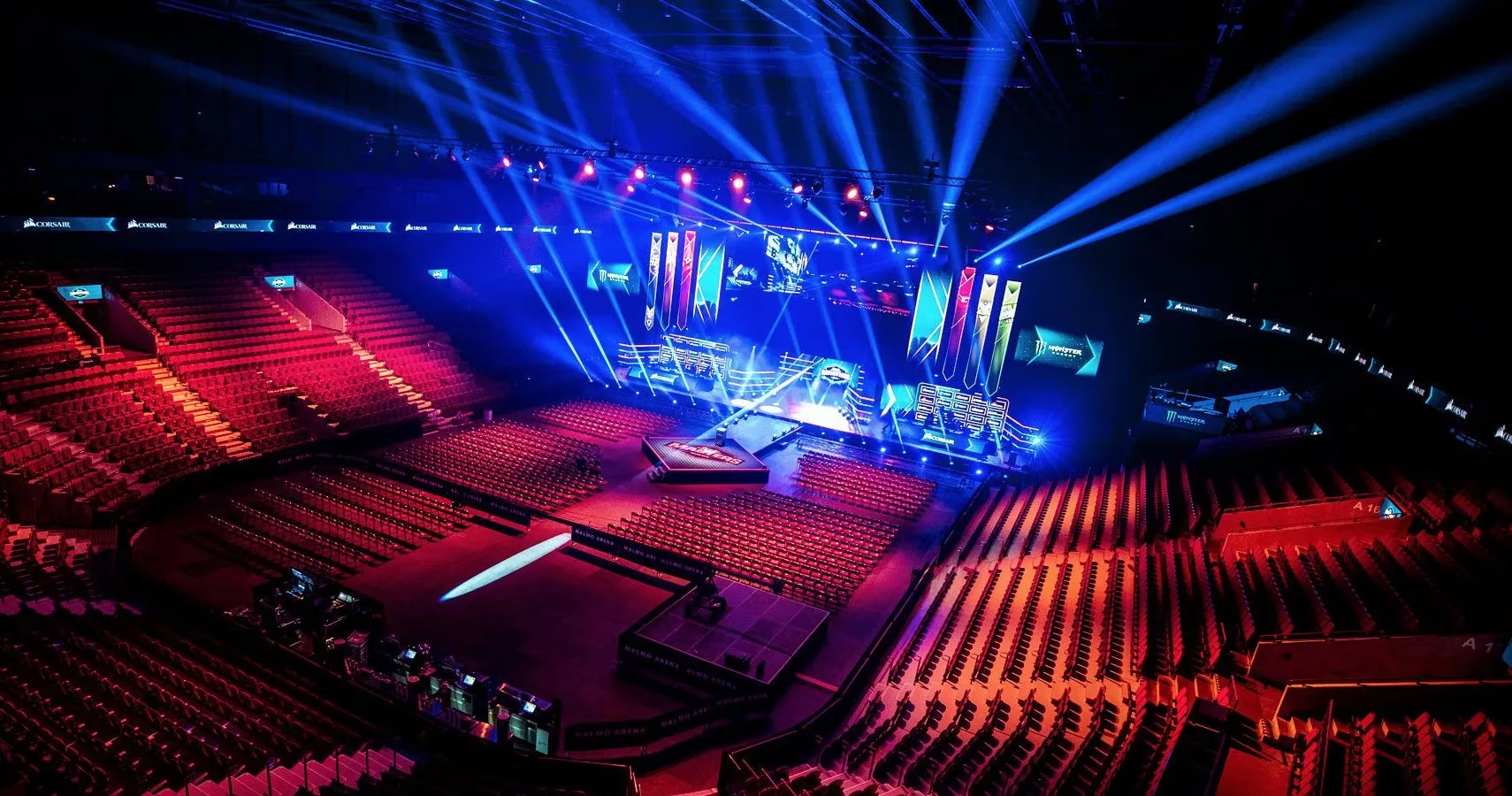
In response to the unprecedented global health crisis that reshaped the esports landscape in 2020, DreamHack made a pivotal decision to transform their flagship Counter-Strike: Global Offensive tournament into a fully digital experience. What was originally planned as a traditional LAN event in Jönköping, Sweden, evolved into DreamHack Masters Spring, marking a significant shift in competitive gaming's approach to maintaining tournament integrity during challenging times.
Tournament Restructuring and Prize Pool Enhancement
The organizers didn't simply move the event online—they completely reimagined its structure to accommodate the new digital reality. The prize pool received a substantial boost from $250,000 to $300,000, demonstrating DreamHack's commitment to supporting the competitive scene despite the logistical challenges. This increase reflected the organization's dedication to ensuring that professional players and teams would continue to have meaningful competitive opportunities and financial incentives.
Regional Division System
The tournament adopted a comprehensive regional framework that became a blueprint for future online esports events. The competition expanded from the originally planned sixteen teams to an impressive thirty-two squads distributed across four distinct geographical regions:
European Division 💪
-
Teams: 16 competing organizations
-
Prize Pool: $160,000
-
Significance: Represented the largest and most competitive division, featuring elite European Counter-Strike talent
North American Division 🌎
-
Teams: 8 participating squads
-
Prize Pool: $100,000
-
Competition Level: High-stakes battles among top NA organizations
Asian Division 🌏
-
Teams: 4 competing teams
-
Prize Pool: $20,000
-
Regional Impact: Provided crucial competitive opportunities for Asian teams
Oceania Division 🦘
-
Teams: 4 participating organizations
-
Prize Pool: $20,000
-
Community Benefit: Ensured representation for the Pacific region's competitive scene
Qualification Process and Team Selection
The tournament structure incorporated both direct invitations and open qualification pathways, ensuring a balance between established powerhouses and emerging talent. Ten team slots remained open for determination through competitive qualifiers, with eight positions specifically allocated for open qualifier participants. This approach democratized access to the tournament while maintaining high competitive standards.
The qualification system allowed aspiring teams to prove their worth against established organizations, creating compelling storylines and unexpected matchups that enriched the tournament's narrative. Teams from various skill tiers had opportunities to showcase their abilities on a prestigious stage, potentially launching careers and establishing reputations within the global Counter-Strike community.
ESL Pro Tour Integration
DreamHack Masters Spring maintained its significance within the broader competitive ecosystem by continuing to award points toward the 2020 ESL Pro Tour. This integration ensured that the tournament's results would have lasting implications for team rankings and qualification prospects for subsequent major events. The Pro Tour points system provided additional motivation for teams to perform at their absolute best, as strong performances could secure advantageous positions for future competitions.
The tournament served as a crucial stepping stone toward ESL One Cologne, a Masters Championship level event scheduled for early July 2020. Teams understood that their performance at DreamHack Masters Spring would directly influence their standing and seeding for this prestigious championship, adding extra weight to every match and round.
Tournament Timeline and Schedule
The competition was scheduled to commence on May 19th, 2020, running through June 14th—a nearly month-long celebration of competitive Counter-Strike excellence. This extended timeline allowed for comprehensive regional competitions, ensuring that each division received adequate attention and broadcast coverage. The schedule accommodated different time zones, making it possible for global audiences to follow their favorite teams and regions without significant inconvenience.
Impact on Competitive Gaming
The transformation of DreamHack Masters into an online regional format represented more than just a logistical adaptation—it symbolized the esports industry's resilience and flexibility. The decision to proceed with the tournament, albeit in a modified format, provided professional players with continued employment opportunities, maintained fan engagement, and demonstrated that competitive gaming could thrive even under restrictive circumstances.
The regional structure also had the unintended benefit of highlighting local talent and regional playstyles that might have been overshadowed in a traditional international LAN environment. Fans gained deeper appreciation for their regional scenes, and teams developed strategies specifically tailored to their divisional opponents.
Technical Considerations and Online Competition
Transitioning to online play presented unique challenges that tournament organizers had to address. Issues such as server selection, ping fairness, anti-cheat measures, and connection stability became paramount concerns. DreamHack implemented robust technical infrastructure to ensure competitive integrity, working closely with Valve and third-party anti-cheat providers to maintain the tournament's legitimacy.
The online format also changed team dynamics and communication patterns. Players competed from their homes or team facilities rather than in the high-pressure LAN environment, potentially affecting performance and mental preparation. Some teams adapted quickly to this new reality, while others struggled with the transition, creating interesting competitive dynamics throughout the tournament.
Broadcasting and Fan Engagement
The digital format necessitated innovative approaches to broadcasting and fan interaction. Production teams created engaging online viewing experiences, incorporating player cameras, voice communications, and interactive elements that brought audiences closer to the action. Social media integration became more important than ever, with teams and players maintaining direct connections with their fan bases throughout the competition.
Viewership patterns shifted as fans could watch matches from anywhere, potentially increasing overall audience numbers despite the absence of live attendance. The tournament's extended schedule and regional focus allowed for more comprehensive coverage of different competitive scenes, exposing fans to teams and players they might not have encountered in traditional international tournaments.
Legacy and Future Implications
DreamHack Masters Spring 2020 established precedents that would influence esports tournament organization for years to come. The successful implementation of regional divisions and online competition formats proved that high-quality competitive gaming could continue even when traditional LAN events became impossible. This adaptability ensured the survival and growth of professional Counter-Strike during a critical period, maintaining momentum for the scene's long-term development.
The tournament demonstrated that esports organizations could respond quickly and effectively to unprecedented challenges, maintaining competitive integrity while prioritizing participant safety and community engagement. These lessons would prove invaluable as the industry continued to evolve and face new challenges in subsequent years. 🎮✨
Data referenced from GamesIndustry.biz helps frame how DreamHack Masters Spring 2020’s rapid pivot to a regional online format mirrored wider industry crisis management: tournament operators didn’t just “go remote,” they rebuilt competitive structures to protect scheduling, broadcast value, and sponsor deliverables while addressing core integrity concerns like latency and standardized match conditions across territories.