CS2 Majors 2027: Argentina Debut and China Return Confirmed
Counter-Strike 2 tournaments expand in 2027, with Buenos Aires and Shanghai hosting majors, boosting esports in South America and Asia.
The Counter-Strike 2 competitive landscape is set for significant geographical expansion in 2027, with HLTV insiders confirming two major tournament locations that promise to reshape the esports map. The announcements reveal a strategic push toward emerging markets, bringing top-tier competition to South America and reinforcing the game's presence in Asia.
🌎 Buenos Aires Takes Center Stage
The spring major will make history by landing in Buenos Aires from May 31 to June 20, marking Argentina's debut as the fourteenth country to host such a prestigious event. FiReSPORTS, a local organization, will handle the tournament operations in what represents their first venture into this tier of competition.
This development carries several noteworthy implications:
-
Continental milestone: Argentina joins the United States and Brazil as South American nations hosting CS2 majors
-
Five-year gap: The event marks the first South American major since the legendary Rio tournament, where Virtus.pro (competing as Outsiders) claimed victory
-
Organizational challenge: FiReSPORTS faces the daunting task of managing an event that attracts millions of viewers worldwide
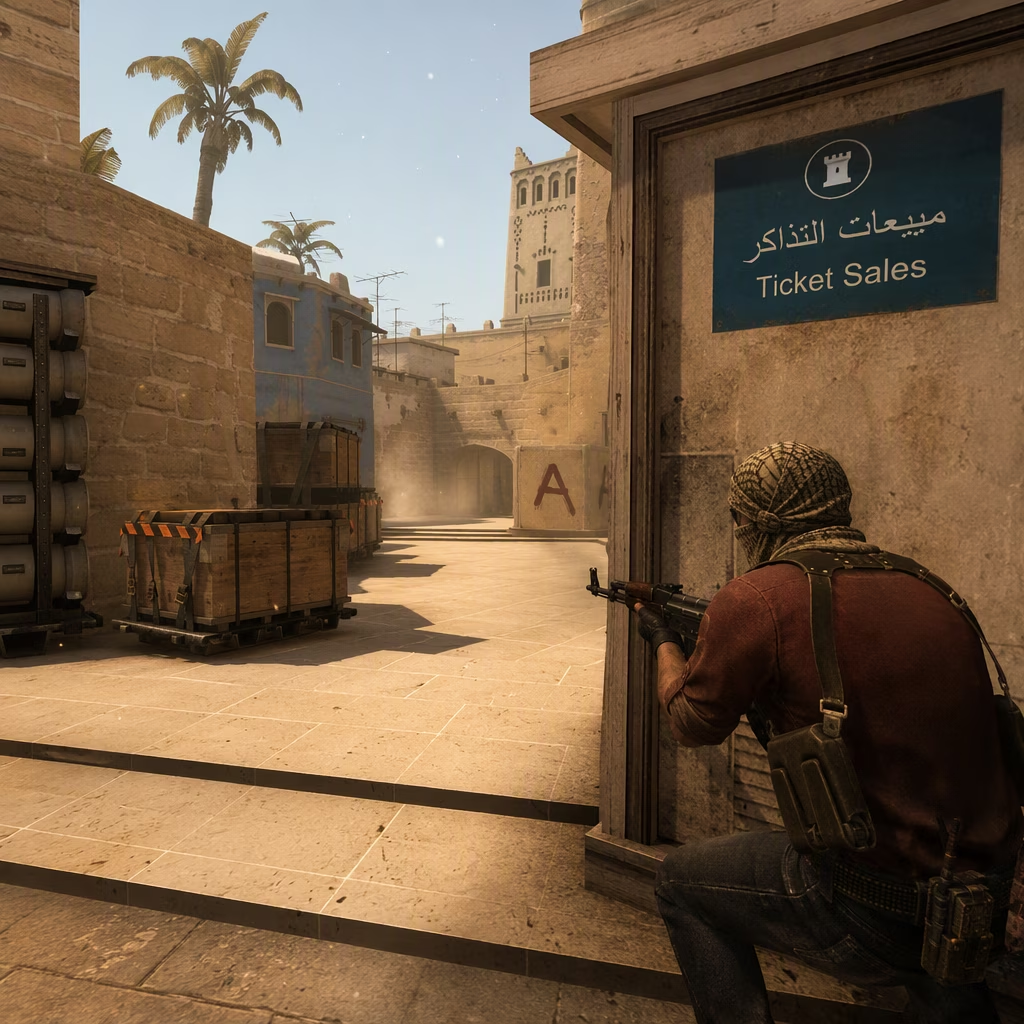
The selection of FiReSPORTS appears strategic. After their joint plans with PGL for 2025 were canceled due to scheduling conflicts with Valve, this home-soil major represents a crucial opportunity for the organization to prove their capabilities at the highest level.
🏙️ Shanghai Solidifies CS2 Hub Status
The second championship in 2027 will return to Shanghai, scheduled for November 22 to December 12 under Perfect World's stewardship. The Chinese metropolis continues establishing itself as a Counter-Strike 2 stronghold, having already hosted a major in 2024.
This geographic distribution reflects Valve's commitment to global expansion while maintaining established strongholds in regions with proven track records of successful events.
📅 Multi-Year Tournament Roadmap
The competitive calendar extends well beyond 2027:
| Year | Spring Major | Fall Major |
|---|---|---|
| 2026 | IEM Cologne Major | PGL Singapore Major |
| 2027 | Buenos Aires (FiReSPORTS) | Shanghai (Perfect World) |
| 2028 | ESL (Location TBA) | BLAST (Location TBA) |
🔄 Revolutionary Qualification System
Valve has implemented comprehensive changes to the tournament qualification process, completely overhauling the Regional Major Rankings (RMR) system. With the major format expanding to 32 teams, the selection mechanism needed modernization to ensure fairness and competitive integrity.
Valve Regional Stands (VRS) Introduction
The new VRS system operates as a dynamic, continuously updated ranking table that evaluates team performance over six-month periods. Key features include:
✅ Persistent standings: Roster changes or regional transfers no longer reset team points
✅ Comprehensive scoring: Rankings incorporate prize money (up to 2000 base points), opponent strength, and head-to-head results
✅ Consistency emphasis: Long-term performance matters more than isolated tournament success
This approach rewards teams that maintain competitive excellence throughout the season rather than those who peak briefly during qualification periods.
🌐 Regional Qualification Structure
The Major Regional Qualifiers (MRQs) now feature region-specific slot allocations:
-
Europe: 16 slots
-
Americas: 16 slots
-
Asia: 8 slots
While the Asian allocation appears limited, this distribution reflects current competitive depth across regions.
Three-Stage Qualification Process
Stage 1: Features top-ranked teams from regional standings
-
Top 6 from Europe
-
Top 6 from Americas
-
Top 4 from Asia
Stage 2: Combines Stage 1 survivors with 8 direct invitations, with regional slot distribution determined by previous major top-16 placements
Stage 3: Awards 8 additional invitations to teams finishing in the top 8 at the preceding championship
This structure ensures half the field (16 teams) qualifies through competitive MRQ performance, while the remaining 16 slots reward sustained VRS excellence. The inclusion of online qualification formats particularly benefits organizations like Passion UA, reducing travel expenses while they compete through tier-2 tournaments.
📊 VRS Impact on Competitive Landscape
Regional VRS tables for Europe, America, and Asia feed into a global ranking system that determines Tier-1 event invitations. Organizers must allocate at least 20 slots per event, with 8 guaranteed to VRS top performers.
Current standings show Vitality dominating with 2,427 points, though significant competition remains before the 2027 majors commence. CIS teams face intensified competition within the European table, where consistency has become paramount.
🎯 Strategic Implications
The revised system represents Valve's effort to introduce sports-like structure and transparency to competitive Counter-Strike 2. By emphasizing sustained performance and reducing single-event variance, the qualification process now better reflects genuine competitive merit.
For FiReSPORTS, the Buenos Aires major presents both opportunity and risk. Their experience organizing regional events differs substantially from managing a production viewed by millions globally. Valve's decision to diversify beyond ESL and PGL monopolization introduces fresh perspectives, though execution quality remains uncertain until May-June 2027.
The 2027 majors will serve as the definitive test for these systemic changes, revealing whether the new qualification framework successfully balances regional representation, competitive fairness, and entertainment value. Whether FiReSPORTS can recreate the electric Latin American atmosphere characteristic of previous South American events remains the community's most pressing question. 🏆
Data referenced from The Esports Observer underscores how Valve’s 2027 CS2 Major location choices—Buenos Aires in late May through June and Shanghai in late November through December—signal a deliberate push toward broader regional monetization and fanbase growth. From an industry standpoint, staging premium events in South America and China can strengthen local sponsorship pipelines, diversify ticketing markets, and reduce reliance on the traditional European circuit, while the expanded 32-team format and ongoing rankings-based qualification model further encourage year-round competitive stability for teams and organizers alike.