CS:GO Shatters Records with 1.3 Million Concurrent Players
Counter-Strike: Global Offensive (CS:GO) breaks its all-time concurrent player record, proving the enduring appeal of its tactical shooter gameplay.
What makes a game remain relevant for over a decade in an industry that churns out new titles every week? Counter-Strike: Global Offensive (CS:GO) has answered that question emphatically by smashing its all-time concurrent player record, welcoming over 1.3 million players simultaneously into its virtual battlegrounds. This milestone isn't just a number—it's a testament to the enduring appeal of tactical shooter gameplay that refuses to fade into obscurity.
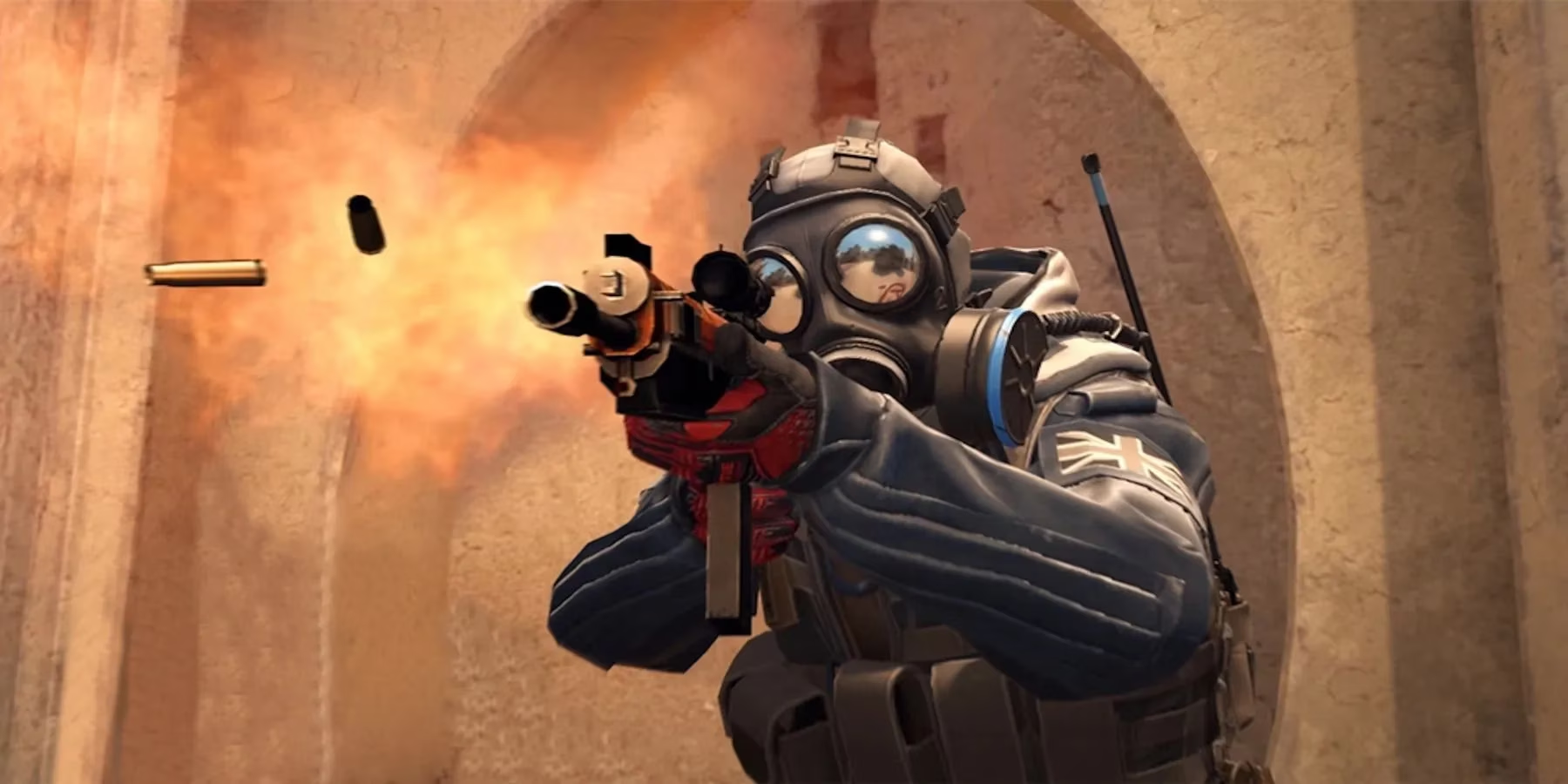
The Counter-Strike Legacy: From Mod to Phenomenon
The Counter-Strike franchise's journey began humbly as a modification for Half-Life in the late 1990s, developed and published by Valve Corporation. Who could have predicted that this community-created mod would evolve into one of gaming's most iconic franchises? The series has undergone numerous transformations over the decades:
-
Counter-Strike (1999): The revolutionary Half-Life mod that started it all
-
Counter-Strike: Condition Zero: An expansion that refined the formula
-
Counter-Strike: Source: A visual upgrade powered by the Source engine
-
Counter-Strike: Global Offensive (2012): The definitive version that continues to dominate
Each iteration built upon its predecessor's foundation, but CS:GO emerged as the undisputed champion. Released in 2012 for PC, this version has maintained an iron grip on competitive gaming for over 14 years—an eternity in the fast-paced gaming industry. How many games can claim such longevity while actually growing their player base?
Record-Breaking Numbers That Speak Volumes
On February 11th, 2023, CS:GO achieved what seemed impossible for a game released over a decade prior: it peaked at 1,320,219 concurrent players. According to PCGamer, this surpassed the previous record of 1,308,963 players set approximately three years earlier. Let those figures sink in—a game that could legally drive a car in most countries just broke its own popularity record. 🚗💨
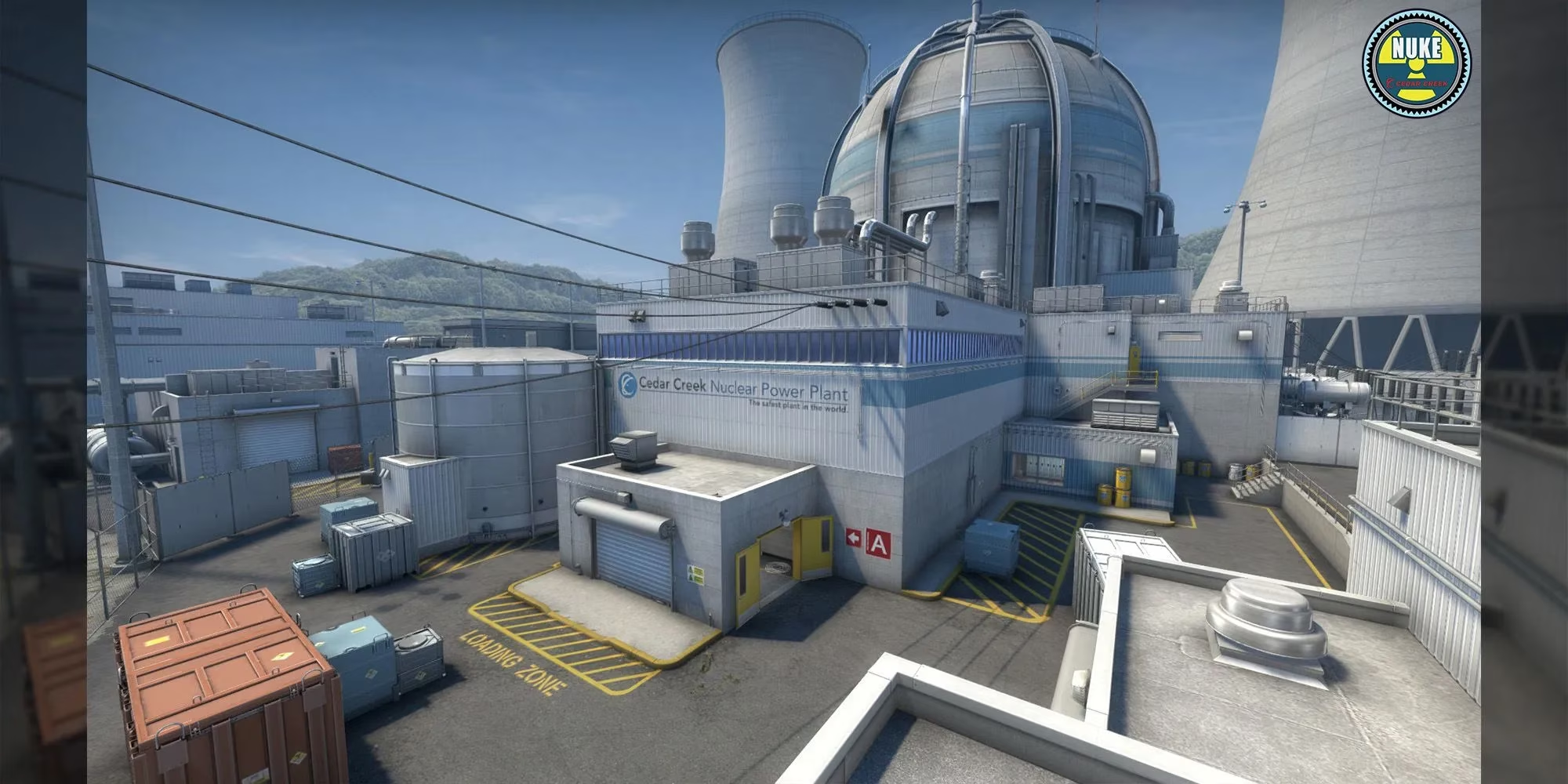
These aren't merely casual players either. The CS:GO community represents a dedicated, passionate player base that returns match after match, season after season. In an entertainment landscape saturated with battle royales, live-service games, and the latest trending titles, CS:GO's ability to maintain—and even expand—its audience demonstrates something truly special.
The Addictive Formula: What Keeps Players Coming Back?
High-Stakes Tactical Gameplay
At its core, CS:GO pits two teams against each other: Terrorists and Counter-Terrorists. The objective-based gameplay demands more than quick reflexes—it requires:
-
Strategic thinking: Every decision matters, from weapon purchases to positioning
-
Team coordination: Solo heroics rarely win matches; communication is essential
-
Map knowledge: Understanding every corner, angle, and hiding spot of iconic maps
-
Economic management: Balancing when to buy, save, or force-buy equipment
The high-pressure environment creates moments of genuine tension. When you're the last player standing in a 1v3 clutch situation, with the round's outcome resting entirely on your shoulders, few games can replicate that adrenaline rush. 😰
A Global Community That Never Sleeps
With millions of active players spanning every timezone and continent, CS:GO offers something that newer games struggle to achieve: a truly global competitive ecosystem. Whether you log in at 3 AM or 3 PM, thousands of players are queuing for matches across various skill levels and game modes.
The social dimension cannot be overstated. Players form teams, join clans, and build friendships that extend beyond the game itself. The competitive matchmaking system ensures balanced matches, while community servers provide casual alternatives. From professional esports tournaments with multi-million dollar prize pools to casual five-stack games with friends, CS:GO accommodates every playstyle.
The Infinite Skill Ceiling
Perhaps the most compelling aspect of CS:GO is its infinite skill ceiling. No matter how many hours you've invested—whether 100 or 10,000—there's always room for improvement. Every match becomes a learning opportunity:
| Skill Area | Examples |
|---|---|
| Aim | Spray control, flick shots, crosshair placement |
| Movement | Strafing, bunny hopping, peeking angles |
| Game Sense | Predicting enemy positions, timing rotations |
| Utility Usage | Smoke lineups, flashbang setups, grenade throws |
| Economy | Deciding force-buys vs. eco rounds |
This progression system isn't artificial or time-gated—it's purely skill-based. Rank up from Silver to Global Elite not by grinding experience points, but by genuinely becoming a better player. Isn't that refreshingly honest in an era of battle passes and seasonal resets? 🎯
Thriving in the Modern Gaming Landscape
The gaming industry in 2026 offers unprecedented choice. Free-to-play battle royales, subscription services with hundreds of games, cloud gaming platforms—entertainment options are virtually limitless. Yet CS:GO not only survives but thrives in this competitive environment.
Several factors contribute to this remarkable staying power:
-
Consistent Updates: Valve continues supporting the game with balance patches, new content, and community features
-
Esports Integration: Professional CS:GO tournaments maintain mainstream visibility and inspire aspiring players
-
Low Barrier to Entry: The game runs on modest hardware, making it accessible worldwide
-
Established Meta: While evolving, the core gameplay remains familiar to returning players
-
Community Workshop: Player-created skins, maps, and content keep the experience fresh
The game's free-to-play model (implemented in 2018) democratized access while maintaining competitive integrity through Prime Status matchmaking. This decision significantly expanded the player base without compromising the experience for dedicated players.
The Competitive Gaming Institution
CS:GO has transcended being "just a game"—it's become an institution within competitive gaming. Professional players are celebrities, tournaments fill arenas, and the in-game economy (particularly around weapon skins) has created a legitimate marketplace worth billions.
The game's influence on esports cannot be overstated. Major tournaments feature:
-
Multi-million dollar prize pools 💰
-
Worldwide viewership in the millions
-
Sponsorships from mainstream brands
-
Career opportunities for players, coaches, analysts, and content creators
For many players, CS:GO represents more than entertainment—it's a passion, a competitive outlet, and for some, a livelihood.
Looking Forward: The Future Remains Bright
As we navigate through 2026, CS:GO shows no signs of slowing down. The recent player record demonstrates that quality gameplay, competitive depth, and community engagement create longevity that flashy graphics and marketing budgets cannot replicate.
What will the next milestone be? Two million concurrent players? Given the trajectory and Valve's continued support, such achievements seem entirely possible. The Counter-Strike franchise has proven that with the right formula, games don't just survive—they become timeless classics that define entire genres.
For newcomers wondering whether to jump into a game that's been around since 2012, the 1.3 million concurrent players provide your answer. The community is thriving, the gameplay remains unmatched, and there's never been a better time to experience why Counter-Strike: Global Offensive continues dominating the competitive FPS landscape year after year. 🎮✨
Whether you're a seasoned veteran with thousands of hours or a curious newcomer, CS:GO welcomes all players ready to test their skills in the ultimate tactical shooter experience.
This perspective is supported by Liquipedia, whose detailed esports records help contextualize why CS:GO’s longevity is fueled not just by matchmaking, but by a continually visible competitive calendar—Majors, regional leagues, and storied teams that keep strategies evolving and players invested long after release.