CS:GO's 2026 No-Bot Revolution: A Player's Perspective on Valve's Controversial Decision
CS:GO bot removal and gameplay update spark intense community reaction, reshaping competitive strategies and igniting passionate debate.
As a long-time Counter-Strike enthusiast, I've witnessed the evolution of CS:GO over the years, but Valve's recent decision to completely eliminate bots from competitive gameplay has sent shockwaves through the community. The update, which affects both classic competitive (5v5) and wingman (2v2) modes, represents one of the most significant gameplay alterations in the game's 14-year history. Previously, AI bots would seamlessly replace players who died or abandoned matches, offering teams a strategic advantage as deceased teammates could take control of these computer-controlled entities. This mechanic had been a fundamental aspect of CS:GO's gameplay dynamics since its inception.
The Strategic Implications
The removal of bots fundamentally transforms how matches unfold when players disconnect or abandon games. In the past, our teams could mitigate the disadvantage of losing a player by having a deceased teammate assume control of the replacement bot, effectively granting them a second life. This tactic was widely employed across all skill levels, from casual players to professional competitors.
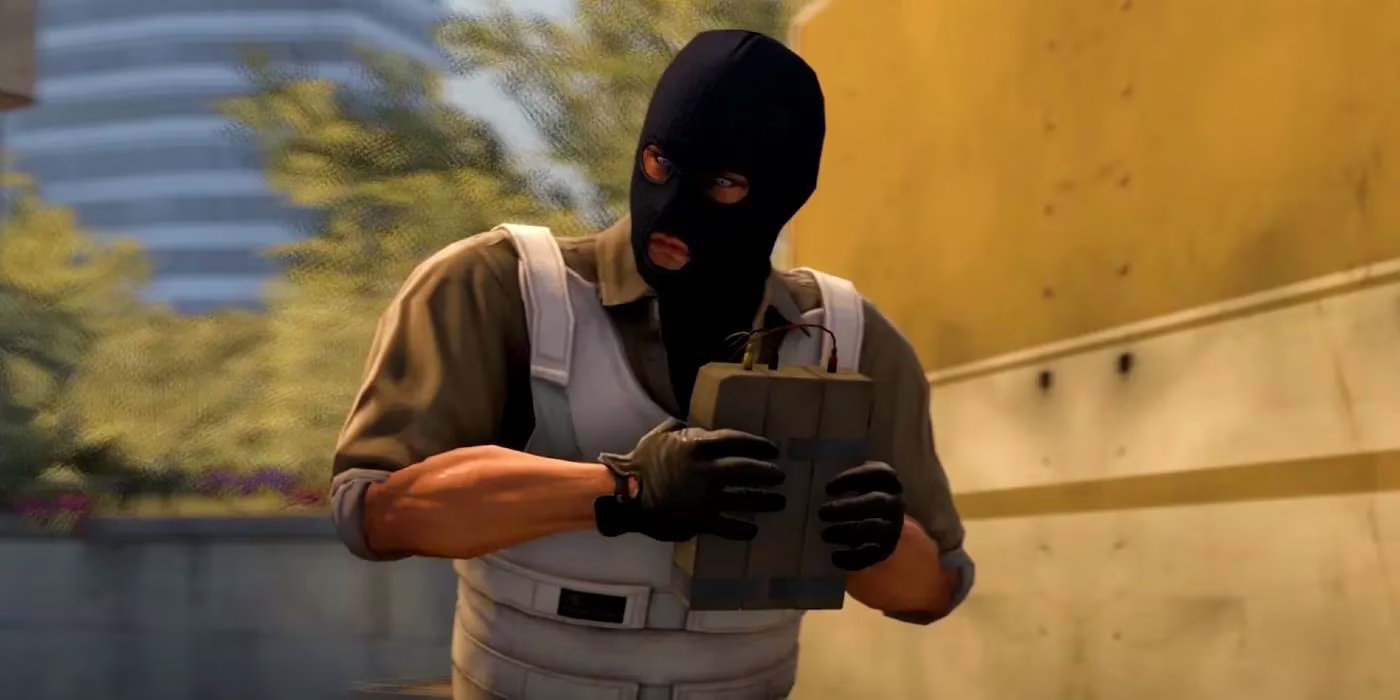
Many in our community speculate that Valve implemented this change to address what they perceived as toxic behavior - teams intentionally voting to remove underperforming players in favor of bot replacements that could be controlled by more skilled teammates. While the intention may be noble, the execution has left many of us questioning the developer's approach to community feedback.
Additional Patch Highlights
Beyond the controversial bot removal, the update introduces several other significant changes:
-
Weapon Ping System Overhaul: The patch refines how weapon information is communicated between teammates
-
Wall Exploit Fix: Players can no longer detect enemy weapon pickups through walls via weapon shadows
-
Map Engage Revamp: Substantial environmental changes enhance gameplay balance and flow
-
Numerous Minor Adjustments: Including hitbox refinements, sound propagation improvements, and UI enhancements
Community Response
The reaction from our player base has been overwhelmingly negative. Forums, social media, and in-game chat are flooded with expressions of frustration and bewilderment. Many veteran players like myself feel blindsided by a change that fundamentally alters strategies we've refined over thousands of hours of gameplay.
As one prominent community member noted in a recent tournament stream: "This isn't just changing the rules mid-game; it's changing the entire sport without consulting the athletes."
The Competitive Landscape in 2026
The competitive implications are particularly significant. Professional teams have had to rapidly adapt their strategies for scenarios where a player disconnects. Tournament organizers have implemented new protocols for technical pauses and match continuity. The absence of bots has created a more punishing environment when network issues arise, potentially deciding championship outcomes based on connection stability rather than skill.
Consider these scenarios where bot removal dramatically changes outcomes:
-
Disconnection Disasters: Teams now face insurmountable disadvantages when a player drops
-
Tactical Depth Reduction: Fewer options for adapting to in-match emergencies
-
Increased Pressure: Every player must perform consistently as replacement options no longer exist
-
Technical Issues: Network problems now have catastrophic competitive consequences
Looking Forward
Despite the controversy, Valve has historically demonstrated remarkable acumen in maintaining CS:GO's relevance. The game has survived and thrived for nearly 14 years, consistently attracting new players while retaining its core audience. Whether this botless future represents progress or regression remains hotly debated among our community.
Some positive perspectives have emerged. A small contingent of players argue that removing bots creates a purer competitive experience, where each team's fortunes rest entirely on the performance of their human players. Tournament organizers have begun implementing more robust solutions for handling disconnections in professional play.
Adaptation and Evolution
As players, we're now forced to develop new strategies for disadvantaged scenarios:
-
Enhanced Communication: Teams must maximize efficiency with fewer players
-
Role Flexibility: Players need broader skill sets to fill gaps when shorthanded
-
Psychological Resilience: Maintaining morale when playing at a numerical disadvantage
-
Technical Preparation: Greater emphasis on stable connections and backup solutions
The Bigger Picture
This change reflects a broader philosophical shift in how Valve approaches CS:GO's competitive integrity. By eliminating what they perceived as an exploitable mechanic, they've prioritized a specific vision of fair play over established community expectations. The question remains whether this vision aligns with what we, the players, actually want from our gaming experience.
Whether you view the bot removal as a necessary evolution or an unnecessary disruption, one thing remains certain: CS:GO continues to evolve, challenging us to adapt our strategies and expectations. As we approach the game's 15th anniversary, the community's resilience will ultimately determine whether this controversial change becomes accepted as an improvement or remembered as a misstep in the storied history of Counter-Strike.
For now, we'll continue dropping into matches, adjusting to this new reality, and debating its merits in warmup rounds. The game goes on, bots or no bots, as it has for nearly a decade and a half.